
URBAN POLLINATORS




BEETLES
Beetles may have been some of the first insects to pollinate plants. Although they play a smaller role in pollinating food crops, they are important to native plants. The Red Milkweed Beetle (Tetraopes tetrophthalmus), pictured here, feeds on native milkweed plants. As it chews and travels around a plant, it drags its feet across the blooming flowers spreading pollen. Beetles often rely on smell to locate a good place for laying eggs, so they tend to pollinate plants that smell spicy, sweet, or pungent (USDA, n.d.).
FLIES
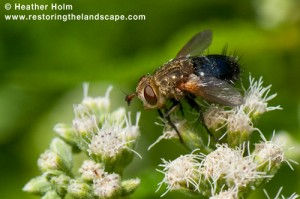
Next to bees, flies are the most frequent flower visitors. They are especially good at pollinating native spring wildflowers such as skunk cabbage and trillium. Flies in the Syrphidae family are often seen hovering around flowers feeding on nectar and pollen, while the larvae feed on crop pests such as aphids and leafhoppers. There are even fly species that look like bees. Flowers that smell like rotting meat are especially enticing to these pollinators.
BEES
When thinking of pollination, the honey bee first comes to mind. Honey bees are actually non-native to North America (they were brought here from Europe). They are still important pollinators and produce honey in their hives. Over the last decade, many honey bee colonies have suffered from Colony Collapse Disorder (CCD), which has negatively affected the ability to grow crops.
Less well known are the 300 - 500 species of native bees that inhabit the Chicago area (Coyne, 2003). Most are solitary, ground-dwelling species that are not affected by CCD. Native bees, including bumblebees, are not aggressive. All they need are open patches of dirt to nest and nearby pesticide-free food sources. Without native bees, we would not have pumpkins, cherries, blueberries, or cranberries.
Meet the Pollinators
Learn more about the most common pollinators found in Northeast Illinois. Keep an eye out for these important neighbors when you're out and about in your backyard or community. How many can you find?



BUTTERFLIES
Butterflies are not as effective pollinators because they visit flowers solely to feed on nectar. Their long legs prevent their bodies from brushing against and collecting a lot of pollen. However, they still spread a small amount. There are around 150 species of butterflies in Illinois (Jeffords, Post, & Wiker, 2014). Butterflies also act as indicators of climate change effects and ecosystem health. Scientists have tracked species ranges and activity periods over decades to assess changes caused by shifting climate zones and changes in habitats.
The monarch butterfly is the Illinois state insect. It is currently in decline because it relies heavily on milkweed for food and egg-laying. Milkweed plants are becoming harder to find because of habitat loss, agricultural chemicals, and excessive mowing of open areas. Join Monarch Watch and report any butterflies you see in your neighborhood.
HUMMINGBIRDS
Hummingbirds are important pollinators, especially in the tropics. The only species in the Chicago area is the ruby-throated hummingbird (Archilochus colubris). Birds have a poor sense of smell but excellent eye sight. They are attracted to brightly-colored (red, orange, pink, and yellow), tubular-shaped flowers. When the birds stick their slender bills into flowers to reach the nectar, their faces get coated with pollen that then gets transferred to other flowers.
MOTHS
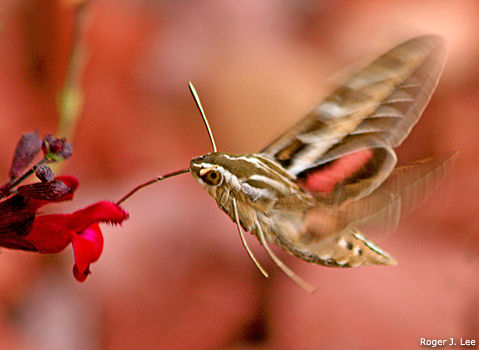
Moths act as pollinators similar to butterflies. Many moths pollinate nocturnal flowering plants, but some moths are also active during the day. The family of hawk moths is often confused for hummingbirds because of their large size and hovering behavior while feeding on flower nectar. They are attracted to strongly scented, sweet-smelling flowers.
ANTS
Flowers pollinated soley by ants are uncommon in the Chicago area, but ants are still important to the pollinator group. Ants tend to get nectar from low-growing, small-flowered plants. Because some ants bite or sting, some plants may rely on them to protect their reproductive organs from other insects and animals looking for a food source (USDA, n.d.).